
Route Memory: How to Build and Recall Beta Effectively.
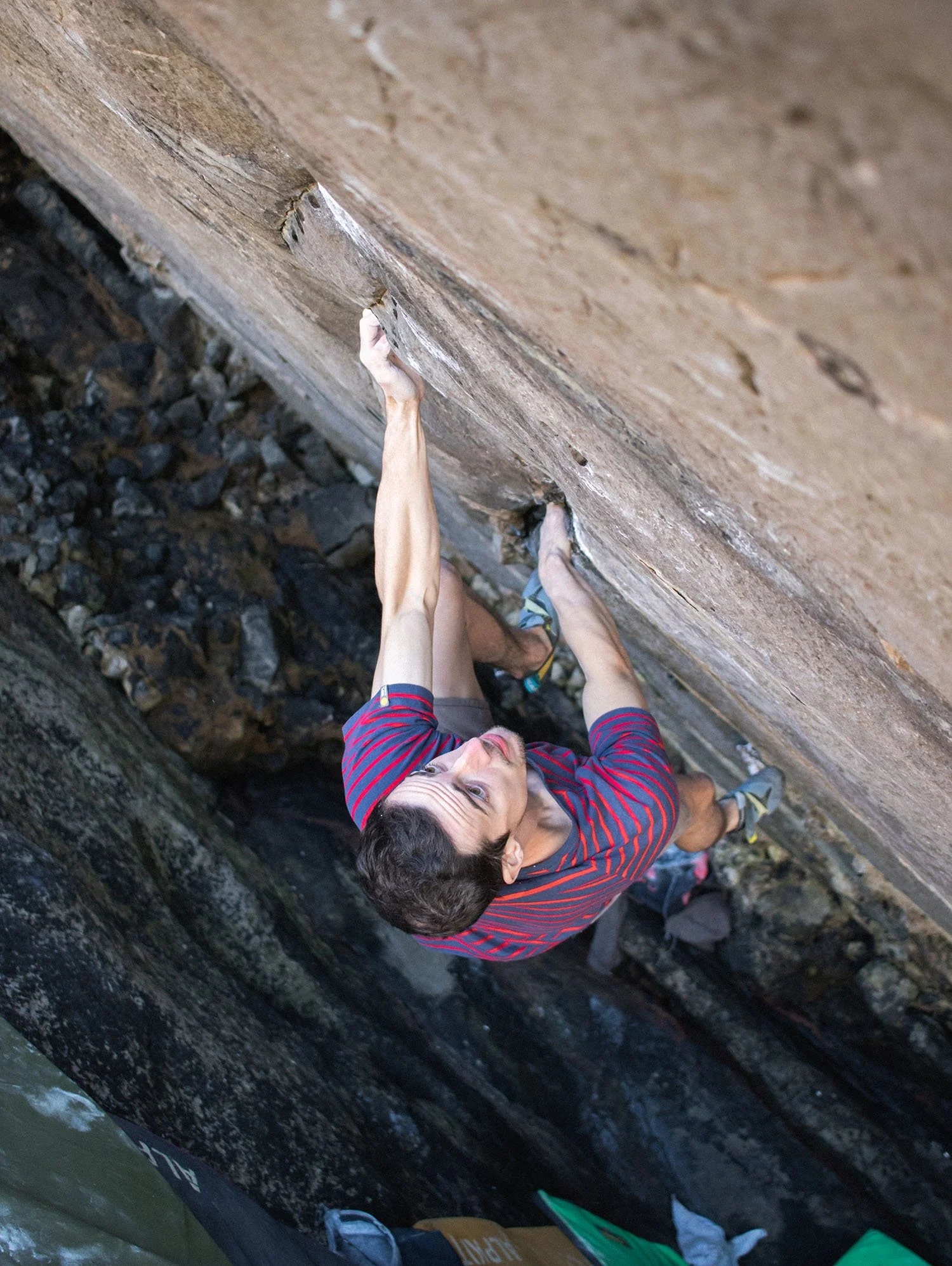
Forgetting beta is one of the most common yet avoidable mistakes that climbers make. It’s all too easy to have a sequence decided upon, refined and prepared only to miss a little piece of the puzzle, where it all falls apart. One missing transition or foot move can leave you flustered and dazed, usually back on the mat. So when it comes to route reading, what is enough? How many times does the sequence need repeating, memorising or visualising?
Muscle Memory
Recalling sequences at a high level is all about preparation, and miles on the clock. Many people think that just through climbing and trying hard, the memory will just work and the sequences will stick. But of course, our brain is a muscle just like any other, and needs exercising. The more we can practice memorising sequences, the easier it becomes to memorise them. And the difference is really clear to see on the wall. Those who can climb a sequence and remember exactly what they did, have an enormous advantage in being able to know what to change. The next time you climb a boulder outside around your base level, wait 5 minutes and then try and recall exactly what you did for the hand and foot sequence. I have tested this with many climbers over the years, and surprisingly few have 100% accuracy. This skill is also something that is easy to practice, but just takes some discipline. So what is the best way to practice improving your memory for remembering sequences?
Techniques
The most simple technique is to pick an approx 10 move boulder problem you want to do, and find a video of it. In this case we’ll just use the person in the video’s beta, but in reality I would often modify their sequence to suit my style. Spend 10 minutes watching the video on repeat, and trying to gain as much information as you can. Then, have a few minutes break, and without the video, try and completely recall the sequence including hand and foot moves. If this is too difficult at first, remove the foot sequence, and just focus on the hands. When you can recall the hand sequence every time, then add the foot sequence until that is perfect. From here you can add nuances such as body positions, resting positions, chalking up or deep breath points.
If it helps, verbally speak the sequence out loud, e.g. left hand to small side pull, right toe on smear, right hand to sloping gaston. Another thing most people can improve on is the detail with which they refer to holds. If you just refer to every hold as ‘crimp’ or ‘side pull’, then suddenly memorising a route becomes a little more difficult, and very samey. If you can add little descriptors into each hold, e.g. rounded smile crimp, or sharp backhand crimp etc, you will suddenly be able to communicate your sequence more easily to people, as well as remember it yourself.
Recording a Sequence
One of the most important elements to recalling sequences is to actually record them. It’s all too easy to finish a session at the boulder, only to return later and having to relearn the subtleties, or even sometimes big parts of the sequence. A big key here is to record your sequence in some way, whether it’s through a voice note, or written note, or even better a video of yourself cleanly climbing the sequences. The benefits here are pretty big, as they allow you to not only memorise the sequence through reviewing the video, but then also improve your confidence and visualisation through re-watching the video.
Memorising sequences may seem like an obvious and even basic skill set, but having this skill set practiced consistently and refined can bring a huge amount
of consistency and focus into your climbing that it's impossible not to benefit from!
Keep the brain working,
Jacob.