
Ego on the Rock: How Comparison Kills Creativity
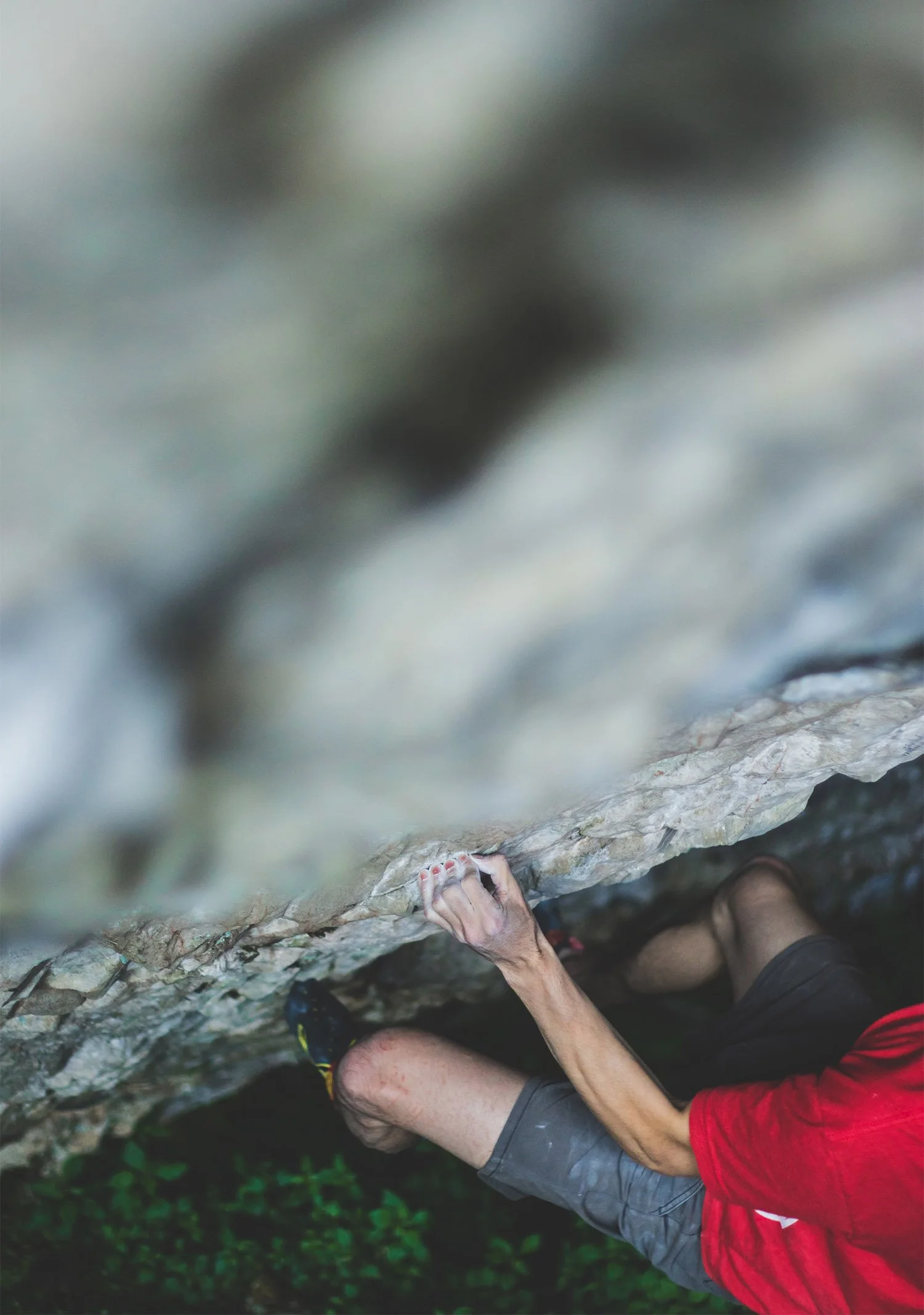
Back in 2014, I was in Magic Wood Switzerland projecting my first 8B Boulder, Riverbed. I had spent the whole week attempting the boulder, climbing day on day off and fully investing in the climb. I was feeling the pressure and experiencing some rough tendon issues in my biceps, making each session progressively more painful. I knew I was getting closer, but the trip was also drawing to a close. I was running out of days. On one of the last days of the week, Jakob Schubert who was also staying at the guesthouse, casually mentioned that he had that day flashed Riverbed. Now whilst it had been flashed before, I was shocked and couldn’t believe how high his level must have been to flash something like that. For a few minutes, I caught myself having those classic thoughts, “if he can just rock up and flash it, why am I bothering?” and “why am I getting so invested in something that is totally not relevant in the scheme of things”.
It took a few conversations with myself to get out of this little trap, and remind myself that comparing myself to Jakob was about the most stupid thing I could do. But not because he was a pro and I had been climbing for 4 years, but because comparison to anyone that’s not yesterday’s version of yourself, is a fallacy. I couldn’t give myself the ego save of telling myself “well I’ve been climbing for 4 years”, because what happens when someone who’s been doing it for 3 years comes along and flashes your project? If you constantly look to protect your ego, you’re dodging the lesson. The lesson is no matter who is doing what, your focus should be on improving your own game. By all means learn from the Jakob’s of this world, and try and see what they’re doing that is missing from your game, but don’t fall into the trap of comparing yourself.
The issue, as I eventually realised, was that my focus was more on external validation, than internal curiosity. I was more concerned with a potential ascent of Riverbed being even less significant after Jakob’s flash, than I was with how I could actually learn something from the boulder and have an experience that was fulfilling, as well as stressful. In the coming years, reminding myself of the importance of comparing myself to my former self, was a healthier (if still quite performance driven) modality of thought. I could focus on my improvement over the years, returning to boulders I had previously not completed, and find satisfaction and joy in how I had evolved. If I hadn’t improved, well then I only had myself to blame, and could still take learning away to come back another time. I wasn’t focussing on “so and so has done this”, or “x climber flashed this a decade ago, so I should be able to do it” sort of self talk. My expectations were only measured against myself, and my previous experience.
A big tool that helped me in this realm was journalling my sessions, even just with iPhone notes. I could write down what I learnt each session, and that would help keep me focussed on the process of the boulder, and my progress on it. I would ask myself why I was choosing a particular boulder, and honestly ask myself if it was for the ‘right’ reasons? Right to me being ones that were more authentic, and would allow me to have the sufficient motivation needed to do the actual thing, rather than some fleeting psyche to repeat some hot new ‘soft’ climb that could be a quick tick. When I focus on the boulders I’m truly in the game for, that’s when my best comes out.
Focus on you, your journey and the day to day reality of chasing it. Bin your ego where possible!
Eliot