
The Rock Doesn’t Care: Accepting Indifference to Progress
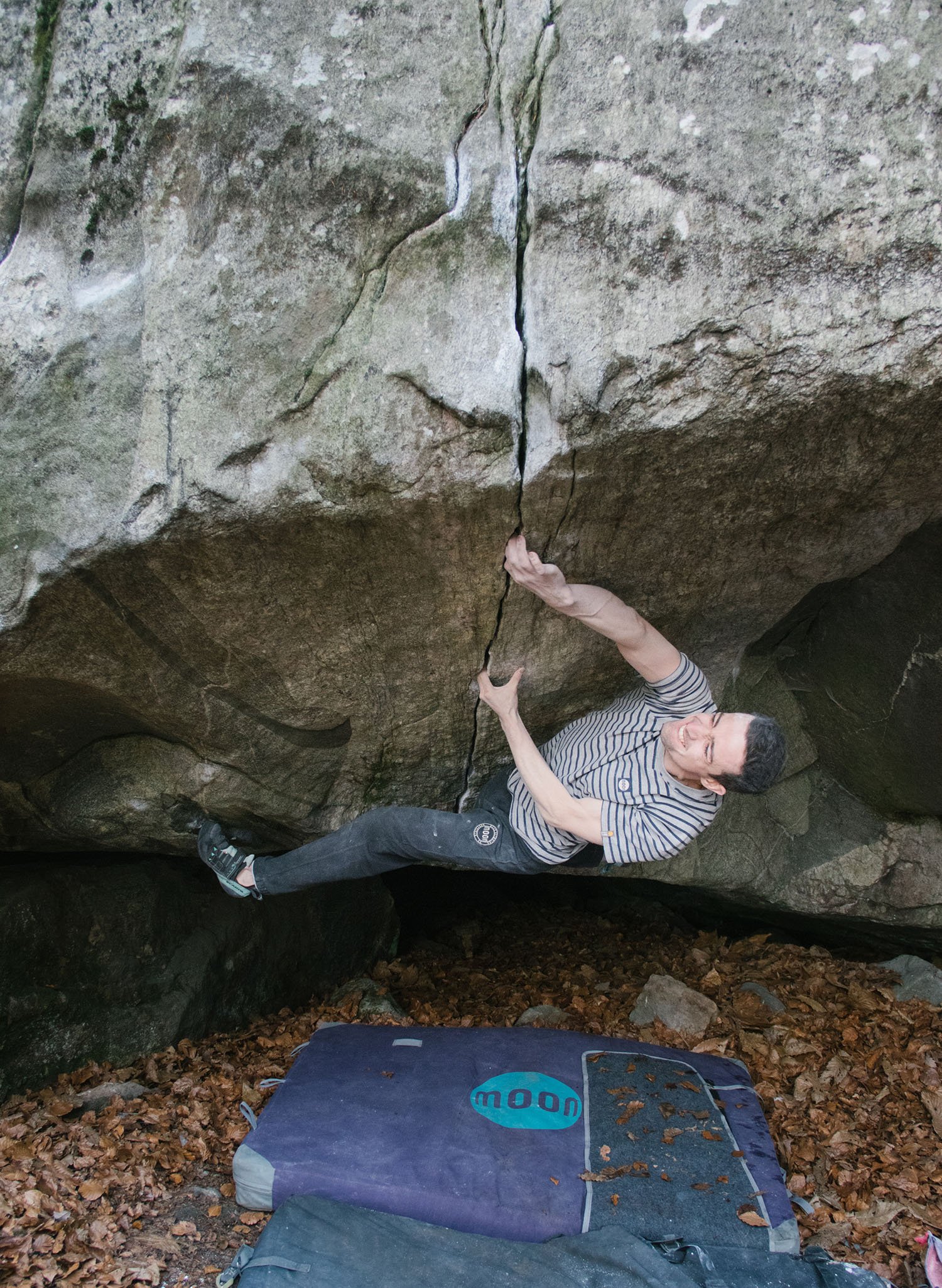
Getting thoroughly shut down by a boulder problem is one of the most grounding aspects of bouldering. The inability to do a single move, or sometimes even hold positions can even be a defeating experience. The feeling of being out of your depth, or shocked at how difficult something is, can cause many people to stick within their comfort zones, and only try boulder problems they have confidence they can succeed on. And that’s fine, everyone can have the experience they want on rock, and that’s the beauty of it. But if you want to push yourself and improve, dealing with this experience is one of the most important responses you’ll have to make in your climbing career. So how do you respond?
Philosophy
Firstly, I think it’s vitally important to understand that the rock is indifferent to us. It’s an inanimate object that doesn’t care about us. It’s not trying to hurt our feelings, or piss us off or shut us down. It simply is what it is. But if anything, that makes our lives easier! We don’t have to second guess it, or try and work out what it will do or say next. Each piece of rock we interact with is (generally) fixed and set in stone forever. So what that means is that we can directly control and create our response to it.
If the rock is asking us to be able to hold a tiny crimp, then we need to listen. If the rock wants us in full iron cross position between two good edges, we need to hear it. Whilst this is quite a reductionist view, it keeps us focussed and honed in on what’s important. If I was to ask you (the reader) what one boulder problem it is a dream of yours to climb, and then ask you to understand what that rock is asking of you in order to complete it, could you answer?
For me, something like Isles of Wonder Sit, an 8C+ in Wales fits into that gap. So what is that boulder saying? Purely in the physical aspect, It’s asking for strong shoulders in a wide elevator doors style position, and strong and robust legs to be able to utilise and not get injured on the intense heel hooks. Mentally, it’s asking for a lot of patience, logistically a lot of travel and walking, and technically, a solid understanding of heel hooking.
So if I want to climb this boulder, my approach and any training should stem from this point. I say this as many people who have such goals, do not understand what the problem they desire to climb is asking of them, and thus fill their climbing and training with things that go virtually no way towards improving them for that specific challenge. But if we say, well isn’t the goal to be well rounded and climb many hard boulders? Then of course you would take a different approach, but I would still strongly argue that hard boulders of every style share some vital commonalities. These could be hold size, demands in tension or body strength, and technical skill. So understanding some of these key requests from the rock is crucial to making your approach more specific.
Mindset and Practice
I think the first key shift to make is from entitlement to curiosity. I am undoubtedly guilty of going to a boulder problem and expecting to be able to do it. It’s one of the worst mindsets to take to a boulder, and almost never ends well. When you succeed, it dulls the experience, as the send was ‘expected’. And when you don’t send, it’s an instant failure as your expectations were not met. And whilst this is a tricky one to overcome, the first key is to start to look at boulder problems for fundamentally what they are, problem solving challenges. They’re not purely physical tests, and they are not designed for us to succeed on. So when you approach a session, take a step back from thinking about ticking the boulder, and look for an experience that is fulfilling. Look to learn something about the rock; maybe it’s finding a certain way to do a move, or making a particular sequence look as clean and smooth as you can when you refine it. Approach the climb with curiosity. When heading into a session, set intentions for that session, but keep them grounded. On a boulder you haven’t tried before near your limit, it might just be to do moves, or hold some of the harder positions. On boulders near your base level, it might be to solve the moves and then climb as efficiently and smoothly as possible.
Once you accept the unchanging nature of rock, suddenly you learn to listen to what it has to say, and to make your own specific plan for improvement.
So how do you react when the boulder says no? Next time, plot your response, and return better!
Eliot