
Crash Pads and Spotting: How to Keep Your Friends Safe, and Yourself Safer when Bouldering.
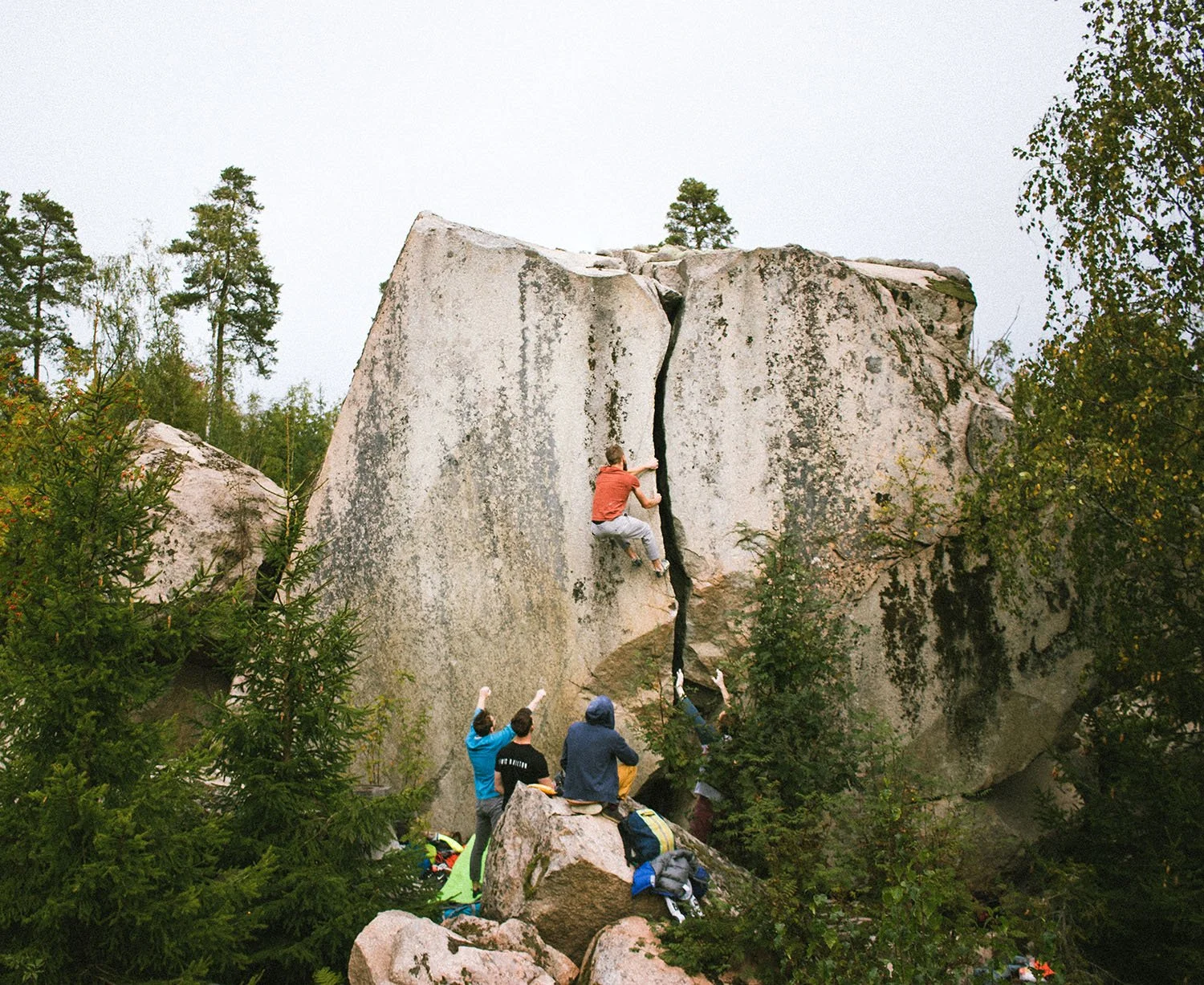
You’re at the top of a boulder, a little higher than you’d normally elect to climb. You’ve had a session’s worth of attempts, getting closer and closer each time. You’re pumped, tired, and starting to get a little scared. You make it through the crux and get to an obvious rest. As you arrive there, you feel anything but restful as you check the landing to see your pads aren’t quite as far back as you wanted them to be. You freeze, and the rest becomes a finish point. You assess your next move, half-heartedly make a few moves up, but return to the rest. Eventually, pumped senseless, you drop off. A potentially successful attempt wasted, and you’re done for the day.
This is a situation that’s happened to me, and in some form or another I’m sure has happened to many others, whether it be from a lack of pads, poor spotting or pad shuffling, or just a lack of communication. So how can we avoid these frustrating situations, and ensure that when we leave the ground for a send go, we’re set to go to the top.
Organisation
The first thing to ensure is you have enough pads for the boulder you’re trying. If you don’t, it’s pretty simple. Don’t attempt it. Obviously crash pads are expensive, so not everyone has an unlimited supply of them. If you have what you need for the boulder you’re trying, make sure you take them! There’s no point finding yourself hesitating on a topout because you couldn’t be bothered to carry the last pad from the car. Make two trips or get some straps and put them together. If you’re seeing yourself hesitate or back off boulders, go equipped.
Next it’s about placing those pads as well as you can. Now in general, my experience is seeing people place pads way too close to the base of climbs, often even to the point of blocking the starting footholds. It’s always possible to fall quite a bit further back than you expect to, so put the pads a little further back than you think you need them. If you’re worried about the start or you need somewhere to sit, get a sit mat, or even a towel or picnic blanket! The worst you’ll come away with is a bruised ass from falling at the start, compared to a lot worse if you bin it off the top of the boulder. Place all your crash pads to protect the finish of the boulder, and try it. Look down as you’re climbing, imagine taking the fall. Are the pads in the right place? Are they far enough back? If not, move them when you’re back down and change your setup. Thin pads nearer the base of the climb, thicker pads further back.
Communication
When you’re lucky enough to have to have company, communicate with your partner or group of friends. If you need a pad moved, tell them when and where you want it moved. If you want a spot, tell them where and when. It’s not rocket science, but taking a few minutes to think and communicate these things gets rid of the guesswork, and keeps everyone safe.
If you’re more comfortable without a spot, but want someone to move more pads, tell them. Not everyone likes being spotted, and not everyone needs it. Ask your friend if they want a spot or a pad moved, but be clear about the specifics.
The safer you can stay whilst bouldering, the more you get to climb, and the more motivated you are to get out and push yourself. Where you can, come equipped with the pads you need, and place them well.
Prepare, organise, assess and communicate.
Be safe out there,
Eliot.