
Pacing a Climbing Trip: Approach, Patience and Precision
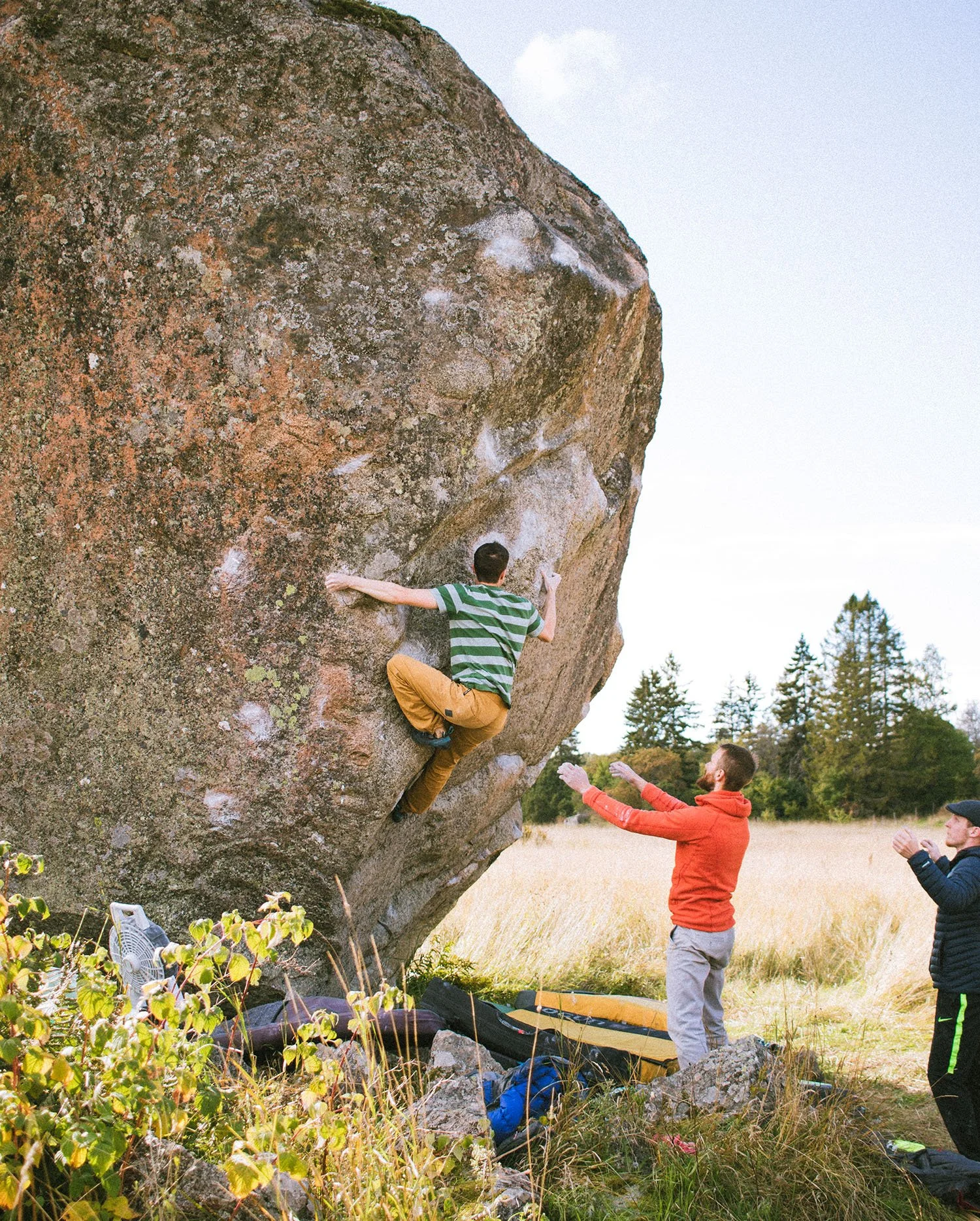
Perhaps one of the most energising things in climbing, is getting off a plane to sunshine and cold temperatures, and beelining straight to an area you’ve been looking forward to visiting for months or even years. No thought to stopping for food or supplies, or even waiting to climb the next day. Just an unadulterated psyche and desire to climb. It's hands down one of my favourite things in climbing. But it also comes with its own big problem. How do you resist the urge to go ballistic and climb for hours on end, ruining your skin and energy for days to come? Impatience in the early days of a climbing trip is perhaps the easiest way to ruin a climbing trip. Skin worn down to the bone, and muscle soreness that takes 4 days to shake off are both things I’ve seen and experienced over the years. The reality is, it’s not just the early days of a trip you need to exercise patience and the right approach, it’s the whole trip, right until the last moment.
Whilst every climbing trip should be fun and enjoyable, it’s pretty hard to enjoy climbing when you’ve got tape on every tip of your fingers and your forearms hurt just to hold a cup of coffee. So let's look at how we can enjoy a trip in a way that gives us the best chance to not only climb more frequently, but also perform well.
Arm Yourself
It’s very common when I speak to people about their climbing trips that they say ‘I wish I’d tried this boulder sooner’ or ‘I should have been more patient early on’ or ‘the weather was bad so I just had to rest for days’. Now sometimes circumstances are outside our control, but the more information we arm ourselves with before going on a climbing trip, the better we can set ourselves up for a good time.
Some important things to know about a climbing area are; what is the rock type like? Is it sharp or skin friendly? If it’s predominantly coarse or sharp, where are the skin friendly climbs I could try when my skin isn’t so good? Do the boulders dry quickly or are there any boulders that stay dry during or after rain? In the days before the trip I’ll be closely checking the weather forecast to see if there’ll be a day or days I won’t be able to climb. If that’s the case maybe I’ll be able to make a bit of a plan for the first days of the trip.
For example if I know that day 1 is dry, but day 2 and 3 are meant to be heavy rain, maybe I’ll climb a little more on that first day, as I’ll likely have to take two days off afterwards. If the weather looks great, maybe I’ll choose to climb every day for the first 2 or 3, and be a little more sensible and not climb for long, or just try and do a couple of boulders around my base level. The more I know about the area and the likely conditions, the easier it is for me to make a plan that will give me the most enjoyment, the most amount of climbing and likely the most success. I may have had a rest day and be eager to climb, but the forecast is showing a good breeze and colder temperatures for the following day. Now if I’m climbing volume, maybe I’ll choose to climb both days, but if I’m projecting, maybe that extra rest day and good conditions the following day will be a difference maker.
I also like to know as much about an area in the first few days of a trip as I can. I’ll look at all of the boulders I’m motivated to try, and often this way I’ll decide on what I really want to try. Sometimes seeing things in person is different. A boulder might look better or worse, the holds maybe more or less sharp, or the landing more awkward and requiring pads you don’t have. The sooner you see the boulder, the better! By all means sample a few of those boulders, but in the early days of a trip, keeping some energy in the tank is useful. As the trip goes along and the days fade away, you can start to open the tap a bit.
Projecting on a climbing trip is a whole different kettle of fish, and it’s something you need to pull all of your skills together (plus a bit of luck) to do well. When it’s really coming down to the wire and you need every last thing to go your way, precision is the thing that can push you over the line. Being at the boulder at exactly the right time, with the right conditions and the right energy and skin. If you can align those things, physically you have the best chance. It’s very easy to let those three things slip through your fingers, so monitor them well.
Skin, energy, and conditions.
The three big needle movers.
Tip the scales in your favour,
Eliot.