
Crimping with Care: Finger Safety on Rock
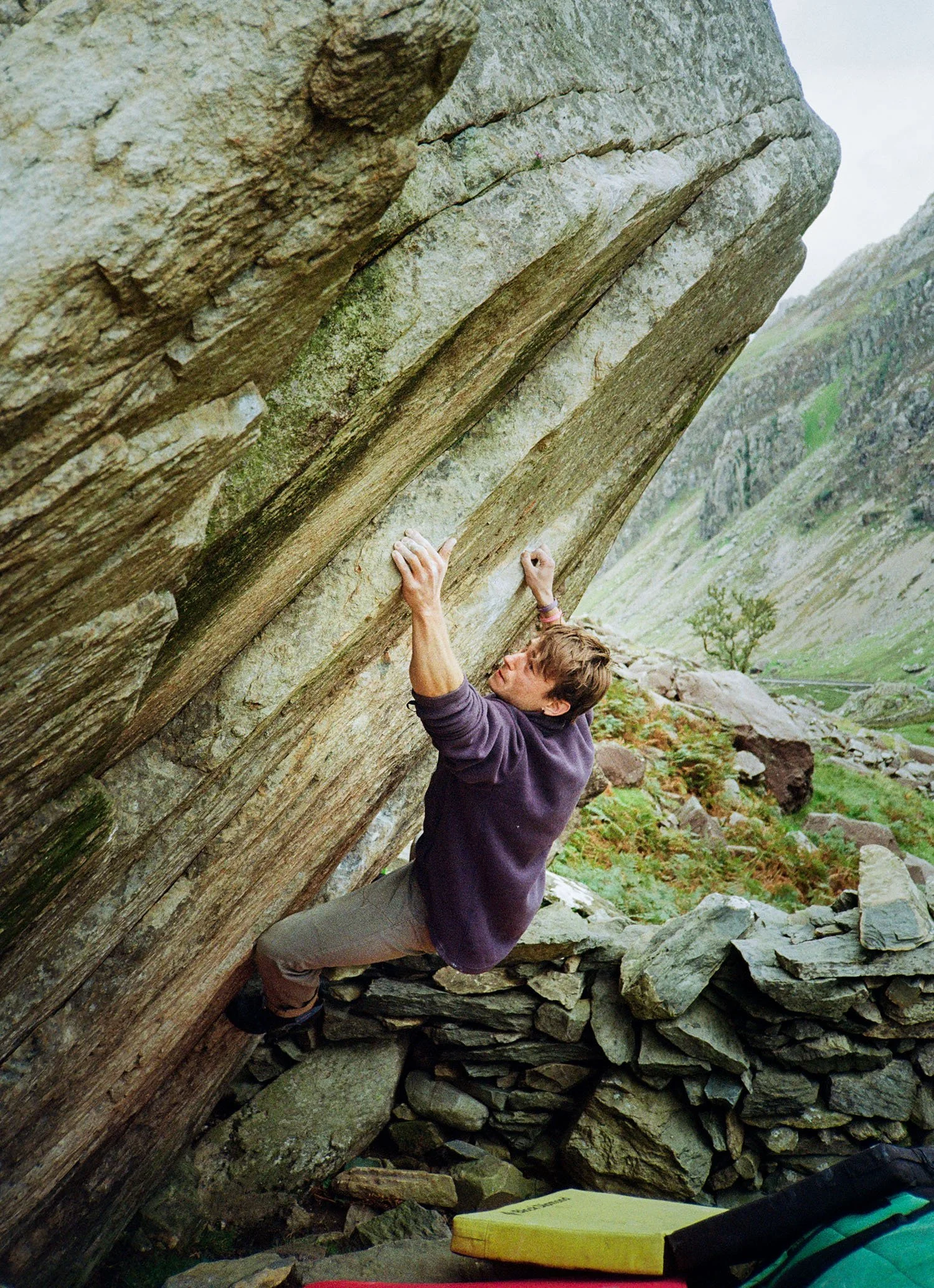
There’s three things for certain in this world. Death, Taxes and Full Crimping on rock.
Whilst modern indoor climbing can foster a belief that full crimping is excessive, or even unnecessary, rock regularly reminds me that this is not the case. And whilst I am personally partial to the grip type myself, I am also aware that mechanically it involves more risk than a classic half crimp grip. So how can we find the balance between utilising this important grip, but not overusing it to the point of injury?
Toolbox
I like to think of different climbing grips a bit like tools in a toolbox. For certain holds, we have half crimp, for others full crimp or open. We have the thumb for pinches or for subtle thumb catches. We have the chisel grip for our rehab journey or for those specific sloping grips in Font. For those tiny crimps however, we have the full crimp. Now the risk starts to come into play, when we pick the wrong tool for the wrong job. Square peg, round hole. 2 finger pocket, full crimp the life out of it. Sound familiar?
I’ve heard many times of people getting drawn into full-crimping pockets, and blowing up pulleys. Whilst this is the most extreme example, I’d argue it’s indicative of an overuse of the full crimp grip in climbing in general. So how can we avoid this trap? Firstly I think it’s about really acknowledging that a varied grip toolbox is part of not only improving your climbing, but protecting your climbing. If you’re able to open hand on pockets, and pinch on pinches, and not have to full crimp slopers, you’re already lowering the number of times you have to crimp, and improving your chances on the boulder you’re trying to access. Yes there is some sense to getting very good at what you’re good at, I fully support that. But doing it at the expense of months of your climbing time from injury? Not so smart. For many people, the full crimp is a grip they use very little indoors, and don’t climb outside frequently. For these folk, some training of the full crimp in a controlled way indoors is actually useful. If you’re going to do it in rock, you should at least do a little of it in practice!
Tactics
When it comes to rock, I like to think of my full crimping a bit like putting money in a piggy bank. Every time I full crimp, it starts to fill that piggy bank. Eventually, that piggy bank will be full, and break. I try to use the full crimp as sparingly as I can. When there is another option, I try to find it. Now certain climbs and areas will necessitate a full crimp, so take extra precautions there to warm up the grip well, and stop before you’re overly fatigued. If I’m working a hard crimp problem, I’m usually crimping at about 60-70% whilst working the problem. I may not be fully wrapping the thumb, or I may even be just trying to half crimp the hold, acknowledging that I’m not giving it my all. But I’m able to learn enough about the moves and the boulder to move my way towards a send. If I can do all this, and protect my pulleys and some energy for the important send burns, I think that's worth it. If a boulder has one particularly crimpy move, I’ll work the sections either side of it a lot more than that crimpy move. This again just means that my attempts on that move will be more likely to count for something!
So consider on rock how you can reduce the amount of full crimping you do, whether it be through problem selection or tactics whilst working a boulder. If it’s a case of stopping early after giving yourself a number of goes on a particularly crimpy move, then be prepared to do that! If it’s a case of choosing a more open handed boulder when your fingers feel stiff, then make that decision. Don’t be tempted to crimp your way into an injury that could set you back months, or even a year.
Stretching and recovery for the hands is also a huge part of making the full crimping count, but that’s a topic for a future post!
Until then, stay safe crimping out there.
Eliot