
Stretching Our Sphere: Flexibility and Mobility for Outdoor Climbing Performance
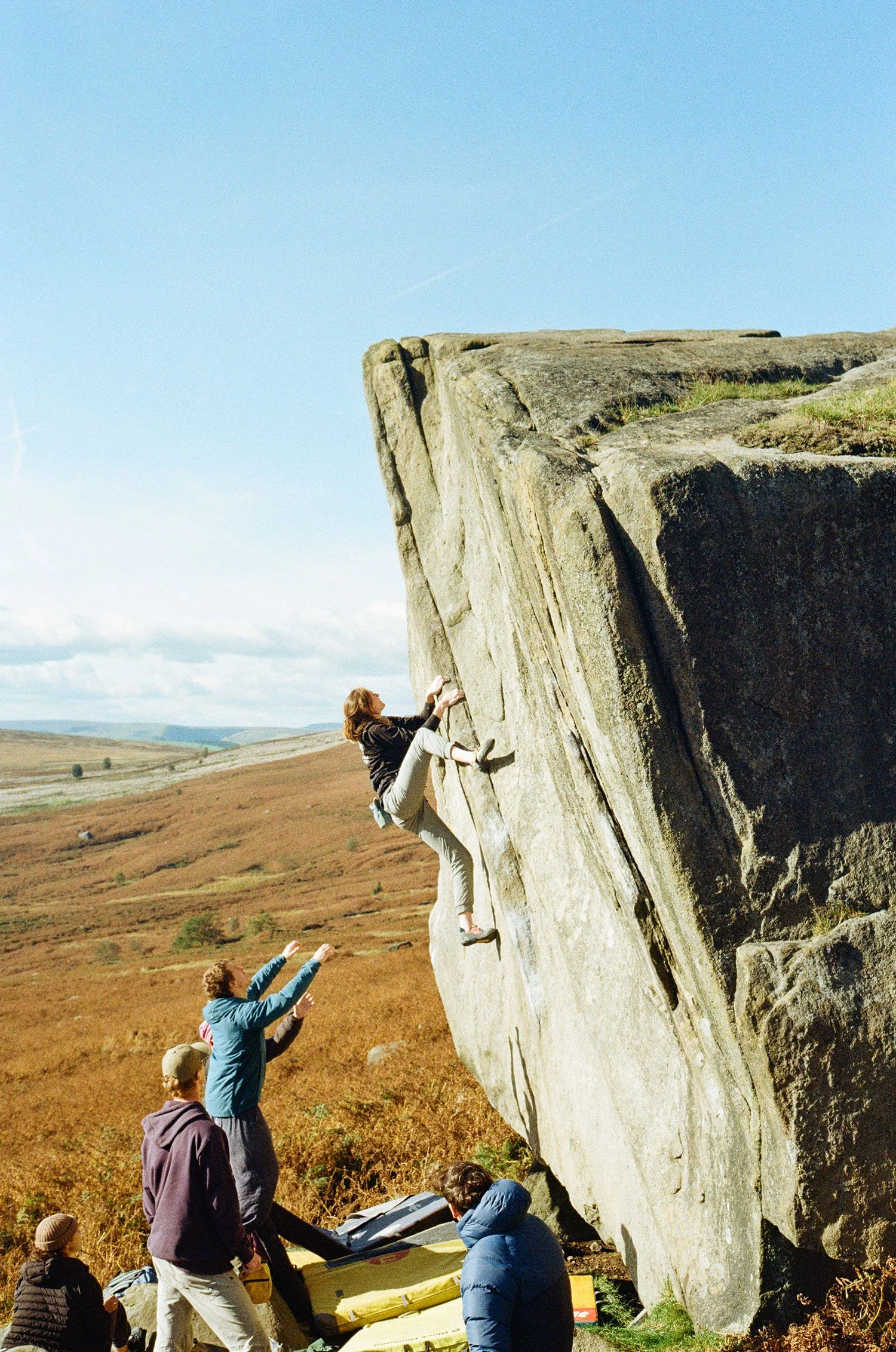
As a highly technical sport, climbing is not simple to understand at the best of times. We can all clearly understand the feeling of being unable to hold onto a crimp, and we can often grasp that we need more power to do a move. But I would argue it’s pretty common to not see where mobility is holding us back. Whilst being unable to get hips close to the wall, or reach a high foothold is pretty obvious, the grey area where mobility really pays off is just that, grey. But how important is mobility really? How can we realise we need to improve it? And how can we make work on that improvement?
Why It Matters
When climbing within our ‘sphere of influence’ (the range we have access to with our limbs), we quickly adjust to that sphere, and it can become hard to imagine anything outside of it. Footholds that might be usable, handholds that might give us access to more footholds, all seem to just go straight on the ‘no use to me’ list. This is the first mistake we commonly make. The number of times I’ve been guilty of this still surprises me. Whether through lack of tension or mobility, I have often found myself coming back to climbs I previously couldn’t do, only to find I could access a different foothold to make a difficult section more amenable. This has on occasion essentially changed the boulder by grades. Sometimes it unlocks a climb entirely, sometimes it just gives you a few percent. But it always helps.
If we think of our sphere of influence in this way, as an imaginary circle around the area in which we can access with our limbs on the wall, we can better understand what is inside our sphere, but more importantly what might be outside our sphere that we can aim to access.
Signs of a Small Sphere
The phrases ‘I just can’t weight that foot’, ‘that box is too small’ or ‘the crux for me is moving that foot across’ are all too common signs of a poor range of mobility. Yes, there is definitely some crossover with tension here, but poor mobility is often disguised as poor tension. It could even be as subtle as feeling a particular muscle being sore due to using it excessively when you shouldn’t need to.
Options for Improvement
There are a myriad of stretching programs and ideas out there on improving flexibility and mobility, so I’m not going to give specific info here; but merely draw attention to the ways in which this area can be targeted. For me, improving mobility and flexibility starts with a goal. Look at the list of boulders you’re motivated for and ask yourself honestly if there are gains being left on the table that will improve your chances on those problems. Many times in the past I have done extended periods of stretching and mobility to improve for specific projects. The benefit here is I’ve been more motivated to do it, and as a result, increased my level to the point of being able to do less to maintain it. So how can we approach it?
As much as people hate to consider it, and I’m yet to see anyone working on it in the gym, integrating flexibility and mobility into your climbing is one of the best ways to see progress in it. Focussing on climbing with hips open, or setting boulders with high or wide feet, is the first way to actually start to address it. In doing this, you’ll start to see where you’re being held back, but hopefully also the scope of what’s possible for your sphere. From here, the options extend to static stretching (which I’ve personally found great), or active mobility work prior to climbing sessions or first thing in the morning to start the day.
But what it all comes back to, is having a reason to do it! Assess your climbing, find your reason, and get to it!
Eliot.