
The “Contact Strength” Myth: What You Really Need Bouldering Outdoors
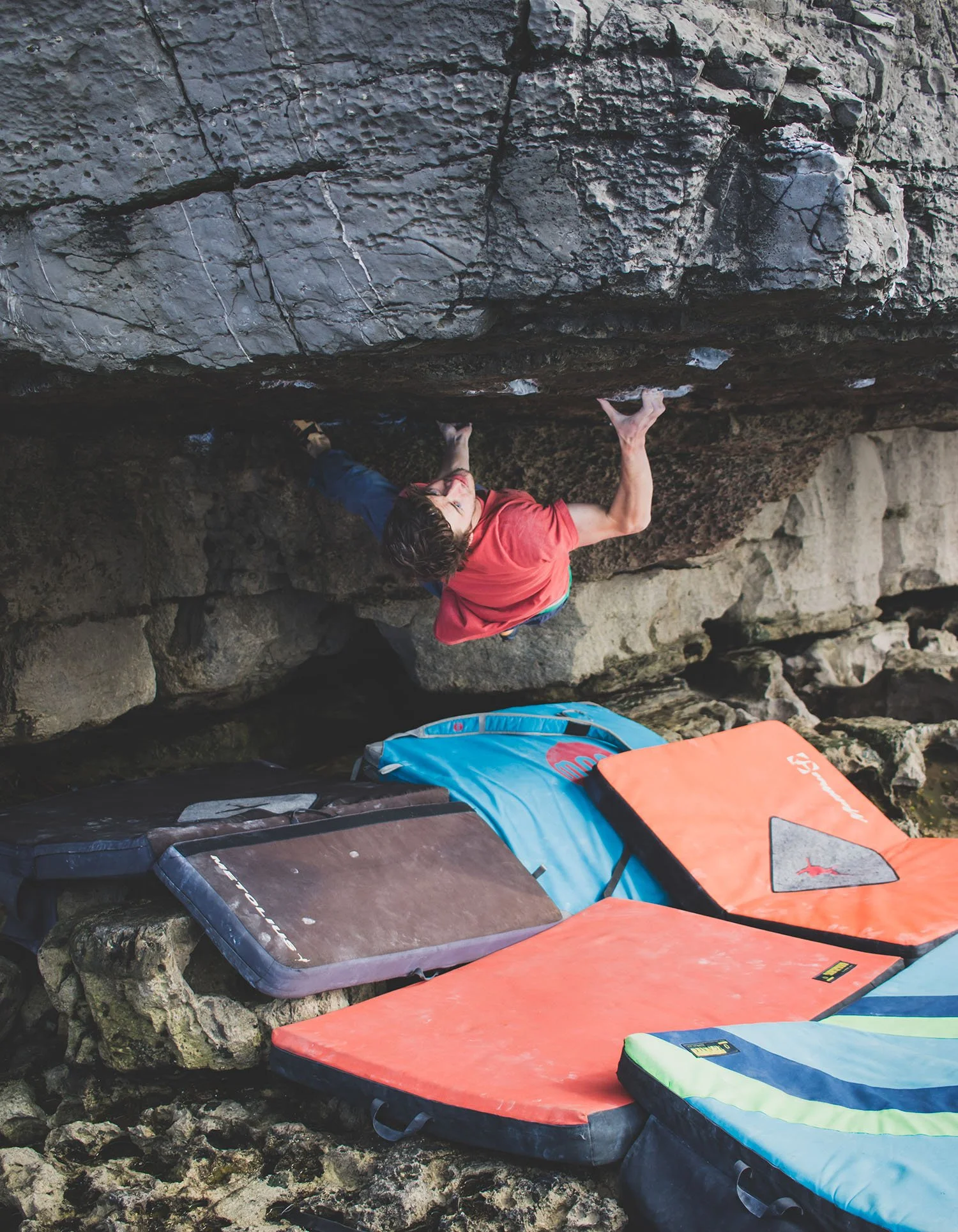
Why is it that some climbers with the strongest fingers you’ve ever seen, are unable to make it up boulder problems that others can? Their technique might be solid, their tactics and psychology all there, but they just can’t do certain moves? Many times I’ve seen climbers with insane levels of finger strength, fail to make certain dynamic or awkward moves work. I’ve often scratched my head and wondered what they were missing, or what others had that they missed. I’ve heard people say things like ‘I can hold the holds but I just can’t catch that’ or ‘why is it so hard to engage on that hold’ or even ‘the move isn’t even big, why can’t I stick it’. Is contact strength at play? Is it power? Or is something else going on?
Missing Link
Having seen a lot of these situations play out, several things occur to me. Firstly, plastic is not rock. Yes there can be complexities to board climbing, but some of the best board climbers I’ve seen, still struggle outside. Rock is a three dimensional entity that a plywood panel can never truly replicate. Shapes, positions, orientations of handholds and footholds will always be different outside, and they make rock climbing unique. Precision is of vital importance. It’s not just about launching to a flat edge you can see from a mile away and land a bus on. It’s often a small slot you must move to in control in order to get it just right. It’s often a tiny crimp that aggressively hitting will bruise your skin and your will in equal measure. Rock requires precision. It also requires timing, much more so than plastic or wood. Hit a hold too early, it becomes difficult to load. Hit it too late? Too much downforce or your body was suddenly out of position. When timing is important, tension is needed. You need that ability to make the body rigid, to give yourself time to hit the hold. You need the tension to keep the foot on and make the timing the move requires.
It’s often said that just slowing down your climbing will lead to results, but that’s only half the story. Slowing down your climbing can be a trap in itself. Suddenly you find yourself in one small box, unable to operate anywhere near your end range and only able to lock down holds in the right positions. The wider the range you can operate in, the better. The more you can combine dynamic movement with steel tension, the better. It’s no good being able to lock everything if you come across a dynamic move you can’t lock, and suddenly you haven’t trained your trunk to stabilize and stop on contact with a hold.
Practice
So how do we integrate this thinking into our climbing? Firstly, when we find these moves on rock, ask ourselves what they’re demanding of us. Is it plain ‘hard’? Or is it ‘weird’, or ‘unnatural’, or ‘small box’ or ‘big box’. Many of these terms I hear regularly, and they’re all pretty interchangeable for with a type of
move; a complex one. These are the moves we should be trying to find, trying to puzzle out and trying to learn from. They’re the moves that have the most application to what we’re going to come up against on the harder boulders out there. They often involve timing, or precision, or tension. Often a combination of all three. They require the ability of our hand to hit a hold like a paper airplane landing perfectly on the ground, and our body to stop dead like a car hitting the brakes in an emergency stop. We have to go from tense and rigid, to dynamic and fast, to rigid and controlled, all in a split second.
Search out these moves. Embrace them, don’t shy away.
Until next time,
Eliot.