
Learning Through Filming: Watching Yourself Without Judgment
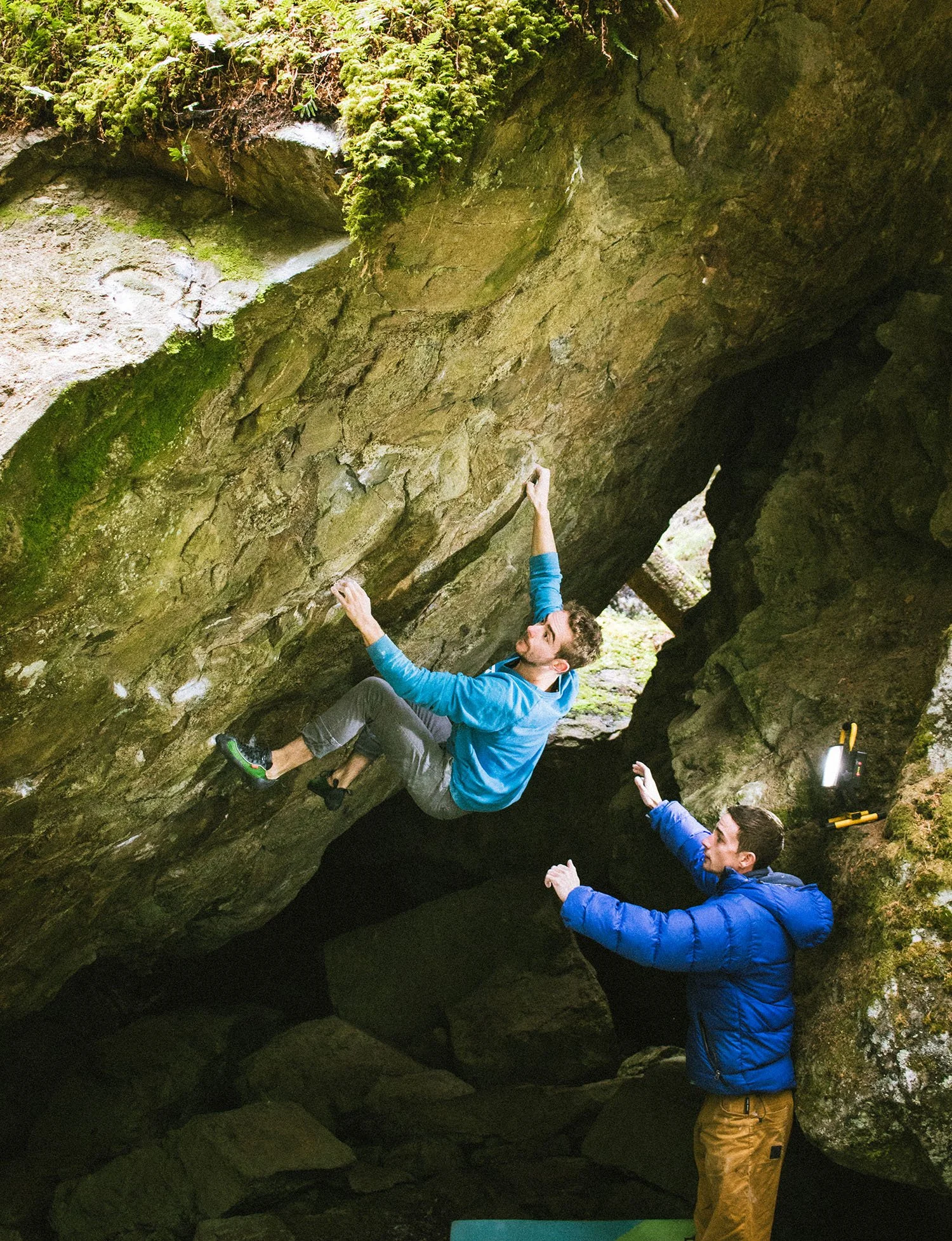
Filming your climbing is perhaps one of the most misunderstood and divisive topics in modern climbing. Many people feel self-conscious recording themselves in a busy gym or crag. Others are happy to set up a tripod or constantly ask a friend to have the camera at the ready. The question becomes what is the filming for? And are some motivations more valid than others? In my humble opinion, people can do what they want. If people want to log their indoor board climbs, let them carry on. If I want to use my instagram or youtube as a log of boulders I’ve done or trips I’ve been on, I’ll do that. Why is one more or less ‘cool’ than the other?
For me, filming my climbing is many things. It’s a visual logbook of sorts, a record of my experiences, and a snapshot of how I was climbing at a particular point in time. I have footage of myself climbing some of my earliest outdoor boulders from back in 2010, and I’m so glad I do. I have footage of some of the best boulders I’ve done, and from some of my favourite climbing trips. Equally, I have footage of board or gym boulders from last week. They’re all different, and serve a different purpose.
Point is, I believe the advantages of filming your climbing are many, and the reasons not to, are few. As a blanket statement, I’d encourage you to care less what others think, and do it more.
Why
If we’re looking from a purely self improvement perspective, filming your climbing gives so many opportunities for improvement. It allows you to review your climbing and learn a huge amount about your movement. It reveals movement blindspots, micro beta or bad habits you may be making. Conversely, it also gives you a chance to see evidence of improvement in areas, and to actually be proud of your climbing. That’s quite a thing, and not to be overstated.
From a short term chance to film an attempt and review it seconds later before your next go, having learnt a crucial piece of micro beta; all the way to reviewing footage of yourself trying a problem from years prior, just to refresh yourself with your sequence and be able to see yourself doing the moves. A big impact in both circumstances, only possible through filming yourself.
Mental Shift
An important shift is also to using the footage not to be overly critical or berate yourself, but to be curious about what you’re doing, and why or how you move in certain ways. Look for things you do well, and ask how you can improve your game to gain more out of those strengths! Be curious about how you do things vs others, and what that might mean? Are there moves you struggle with that others seem to make look easy? Maybe there’s a blind spot there you can dig into. Just like any piece of information you receive, it’s about how you interpret and use it. Take the video of yourself and use it well, and it’ll be a game changing weapon.
Tactics
A couple of extra things you can do that often make a difference are; filming from different angles. This allows you to catch different vantage points of positions or movements, and perhaps see something that’s not obvious from a front on view. Use slow motion, and slow moves down to see where your focus is during different points of a move. Get split screens, where you can compare different attempts or your movement vs others. Lastly, get comfortable with making the filming as easy for yourself as you can. Maybe just use a phone in the shoe, or find a corner of the gym or a crag that’s quiet to begin with. Get comfortable and consistent!
Lastly, think about how you can combine your video filming with other practices you might have. Maybe it’s a written diary or beta log that you can add video to and store. Maybe it’s part of your reflective process post session. Whatever it is, integrate it into your game and use it wisely!
Keep filming…
Eliot.