
Performance Anxiety in Nature: Why It’s Different Bouldering Alone Outdoors.
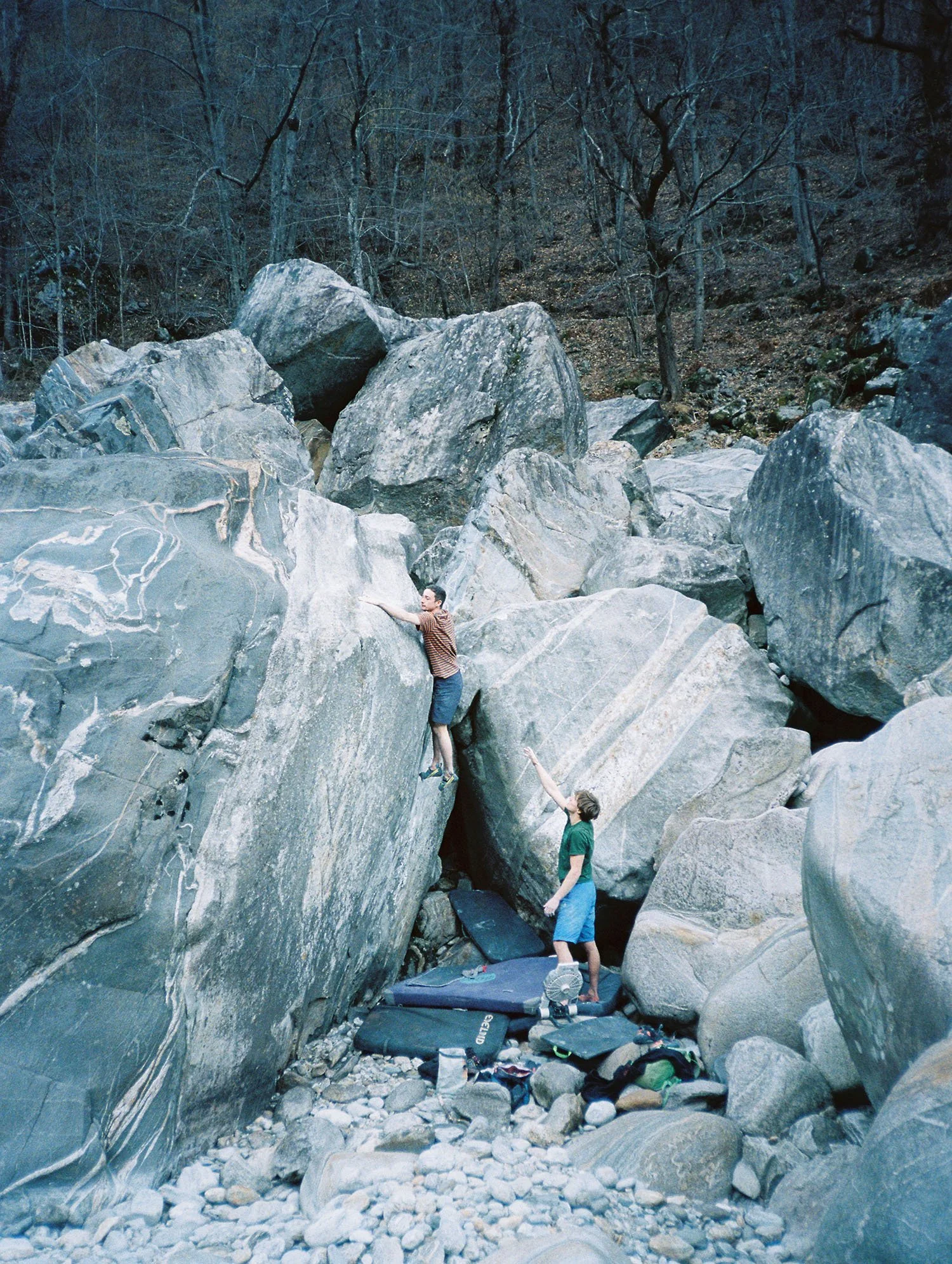
It’s often expected that bouldering outside will have us stress free and without a care in the world. We’ll be out climbing and enjoying nature on our own and totally loving every minute of it. The reality is often quite different. Climbing on your own outside, can often become anxiety inducing and not all that fun an experience. It’s common to see people crumble mentally, struggle to concentrate or even fly into fits of rage when climbing alone outside. But why does this happen? And what can we do to avoid it? If this sounds like something you’ve experienced, then read on.
Contrasting Gym to Rock
The gym environment is a sterile and controlled one. There are other people, chilled music, coffee, and usually hundreds of boulders to try. You can simply step off one hard problem, and move 5 feet to the next one, if the pressure or frustration of trying one is too great. You can’t afford to have a frustrated rage, due to the sheer embarrassment of having others present. Most people's indoor sessions will be a toned down and controlled experience. You’re not letting it all go. The highs aren’t half as high, and the lows not as low. Outside however, is the arena you want to perform in, and find yourself alone in. There is no one else present to offend or put off. There likely isn’t a handful of other choices when it comes to projects around the level you’re trying, so you're stuck with what you’re on! This often leads to the emotions and feelings really reaching a higher level than you’d allow them to indoors. But what causes these feelings in the first place?
Causes
The most common cause of performance anxiety is the fear of failure. Returning empty handed from a session, and not getting a boulder done. There likely isn’t another ‘quick tick’ on an adjacent boulder, and we can’t convince ourselves it’s ‘just training’. Other causes of this anxiety can be pressure to succeed, or the feeling of a lack of confidence on unfamiliar or intimidating terrain or movements. Many people have communicated feeling anxiety at not having practiced the top of a highball boulder, or worked the crux move as many times as they’d have liked. And it’s these short cuts that often add to the anxiety you’re feeling. So how do we address some of these key causes?
Solutions
I mentioned indoors we can convince ourselves that it’s ‘just training’. Well even outdoors it’s possible to do the same trick, despite it requiring some degree of consistency and time on rock to achieve. But the premise is that with enough exposure to these more stressful moments on rock, you can begin to treat them as ‘just training’ or ‘just another day outside’ where you allow yourself to give up the pressure to succeed, due to a feeling of abundance, and opportunity to succeed on another day. The trick for those who have limited time on rock, is to think long term about your climbing, not short. If you get one session outside a week, don’t think about a week, think about a year. Suddenly you have 52 chances to succeed. That’s an infinitely better lens to look through, and one that doesn’t put a time constraint on your climbing success.
When it comes to losing confidence, put processes in place to address this beforehand. Acknowledge that you’ll need to work the top of a high boulder to have the confidence to do it from the ground. Remind yourself to work the crux and repeat it enough times during a session to be able to add moves into it. The key here is looking ahead, and anticipating what stresses might arise, and having a plan to combat them. If it’s fear of arriving at a wet boulder, be disciplined about checking conditions and only go when they’re spot on. Or take a leaf blower and fan and dry some crucial holds. Desensitising yourself to stressful topouts, weird landings or completing the final section of a boulder whilst tired are all great ways to reduce performance anxiety. But the important thing is to practice them.
It’s all too easy for us to go into a session or trip without a plan, and walk ourselves into a trap of stress and anxiety. But thinking ahead of the game, and putting strategies in place will often negate a lot of the pressures before they can build up to boiling point.
But most importantly, always acknowledge that there is always another opportunity to succeed.
Go get em,
Eliot.