
Balancing Patience and Persistence: Walking the Projecting Tightrope
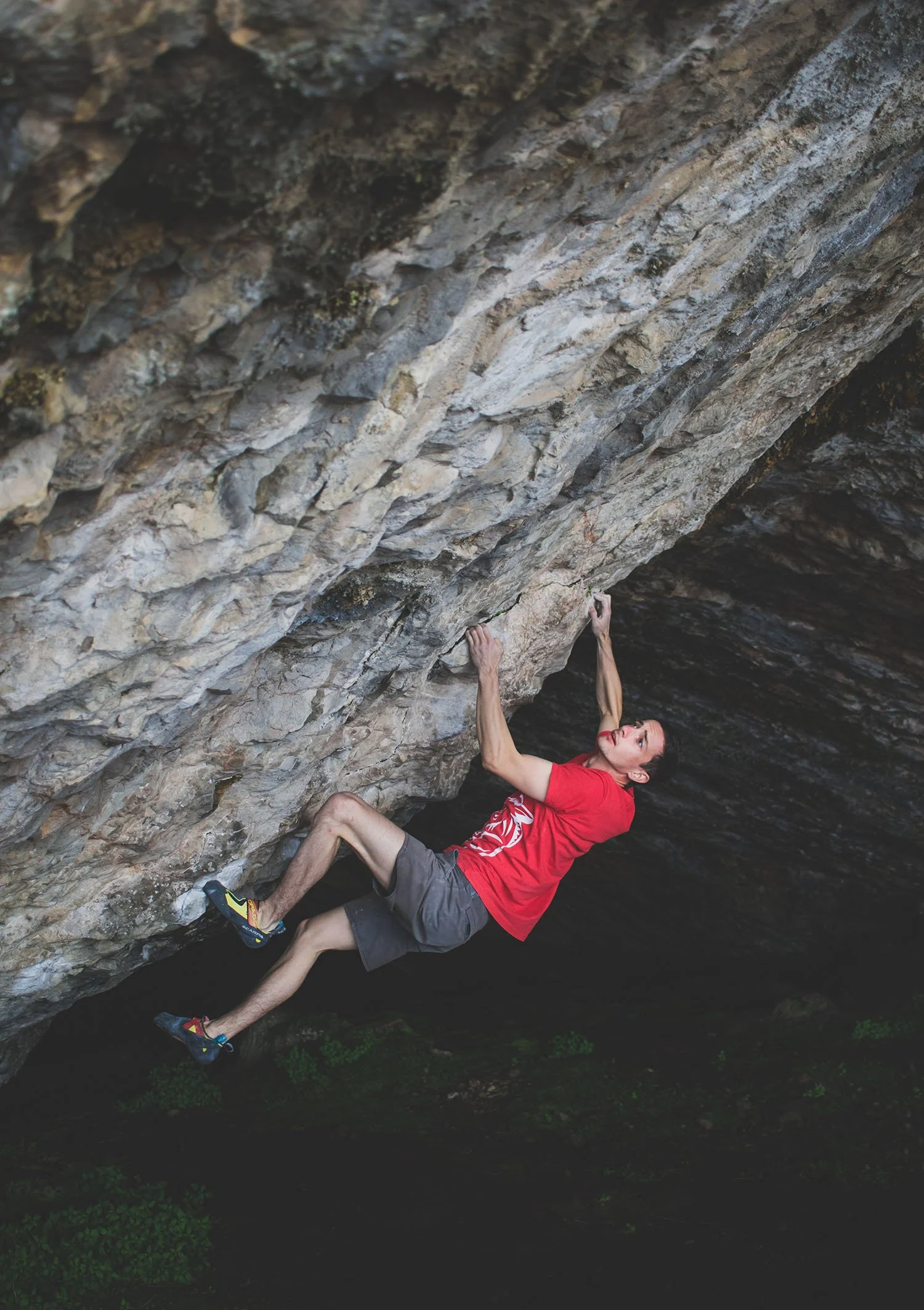
Projecting a boulder problem is undoubtedly one of the most mentally demanding experiences you can have in bouldering. Investing time, energy, thought and quite often money into a boulder that you really want to do, brings with it a whole realm of struggles and challenges. Without doubt, some of the hardest and most stressful experiences I’ve had in bouldering have been as a result of projecting. But… I can also say that finishing a big project has given me some of my most valuable experiences in climbing; not just the moment of the send, but the knowledge and confidence that I was able to push through the process and make it happen. But how many times have I pushed too hard, and learnt a lesson? That’s certainly happened too. Poor motivation, shot confidence or even injury can all come along if you push too far on a project. So how do we find this balance? Let’s look at a few key tips for walking the tightrope.
Expect the Unexpected
The big key here is to expect anything. Never say ‘I shouldn’t fall off past this point’, or ‘that hold’s really comfy, my skin should be fine’. In my experience of projecting, something can always happen that you aren’t prepared for, whether it’s a mental shift, or the pressure building, or conditions worsening. The quicker you accept that anything can happen, the sooner you are able to ‘let go’ of the things you can’t control, and focus on the things that you can control. Your mindset is vital, so putting yourself in a positive headspace and finding something positive to take away from each session is vital to a strong mental game.
I’ve seen this in action from some of the best climbers in the world, and it’s an impressive thing to see. It’s like they’re deluding themselves, but it’s done with such conviction that it bullet-proofs them, and allows them to see tiny margins of improvement which carry them over into the next session, where others might walk away. So if you’re going to stay in the game, find the tricks to tip the scales in your favour. But sometimes, as Kenny Rogers once said, you have to “Know when to hold ‘em, know when to fold ‘em, know when to walk away and know when to run.” Being willing to say ‘ok it’s 15 degrees now and I can’t do the crux anymore’ or ‘this finger is just getting a little bit sore on this hold’ is so hard to do, but vital in keeping you healthy and mentally strong. Walking away and shifting focus for a period of time, is just that. Shifting focus. It’s not quitting or accepting defeat, it’s playing the smart game.
This is a mistake as an impatient person I’ve made time and again, and has very rarely worked out for me. In all the situations I’ve succeeded, it’s when I was patient and took a little time to refocus or change some things and come back better. Sometimes, just digging into that hole isn’t the way. Accountability also really helps here, and often the outside influence of a coach or mentor is enough to snap you out of your senses, and keep you on the straight and narrow!
Look for the Lesson
Whilst I can point out the common pitfalls and stumbling blocks when it comes to projecting, most of us have to learn for ourselves. We need to throw ourselves into that fire and get burnt before we say ‘shit, that was a bad idea’. The important thing to say next is, ‘why did I do that, and how can I avoid making that mistake again’. If I look back at most of the times where I’ve not succeeded on a project, or got injured or struggled with something, it was because of a decision I made, or something I didn’t foresee.
A key example of this for me, was when I ruptured a pulley in my pinky finger in 2015 in Magic Wood, Switzerland. I had warmed up and was doing some filming on an 8B boulder I’d completed a few days prior, Steppenwolf. This is a crimpy boulder with some powerful moves. After an hour or so of repeating moves and filming, we went over to another boulder called High Spirit (8A+). This features a reach up with the right hand into a small undercut pinch above your head. I had a few half hearted attempts, before committing to the hold. As soon as my weight went into my right hand, I heard a loud snap come from my finger. Straight away, I knew it was a pulley rupture. All the telltale signs were there. It took me 6 months to fully rehab that rupture. But why did it happen? Surely I was warmed up from climbing on the 8B? It would be easy to write this off as bad luck, but when I began to look a little deeper, I realised that during the whole time trying Steppenwolf, my pinky finger hadn’t been in a flexed position once. So suddenly, with no warm up I was asking it to take a huge amount of my weight, and of course it couldn’t handle it. My mistake was not warming up my pinkies to be used in a flexed position. Since then, I used a portable fingerboard to warm up every finger in every position I could possibly use it in during the session.
So when things go wrong, ask yourself why. Be critical, be analytical and pull out the learning. It’s nearly always there.
I’d be lying if I said this balance was easy, and knowing when to stick or twist is one of the most difficult things to do in projecting, especially when it’s something you’re obsessed with. But analyse as best you can, and try and control the things you can. But once you make that mistake, learn from it!
So as Kenny would say, “you never count your money when you’re sitting at the table, there’ll be time enough for counting, when the dealings done.”
Eliot.