
The Quiet Mind: Climbing Without Inner Chatter
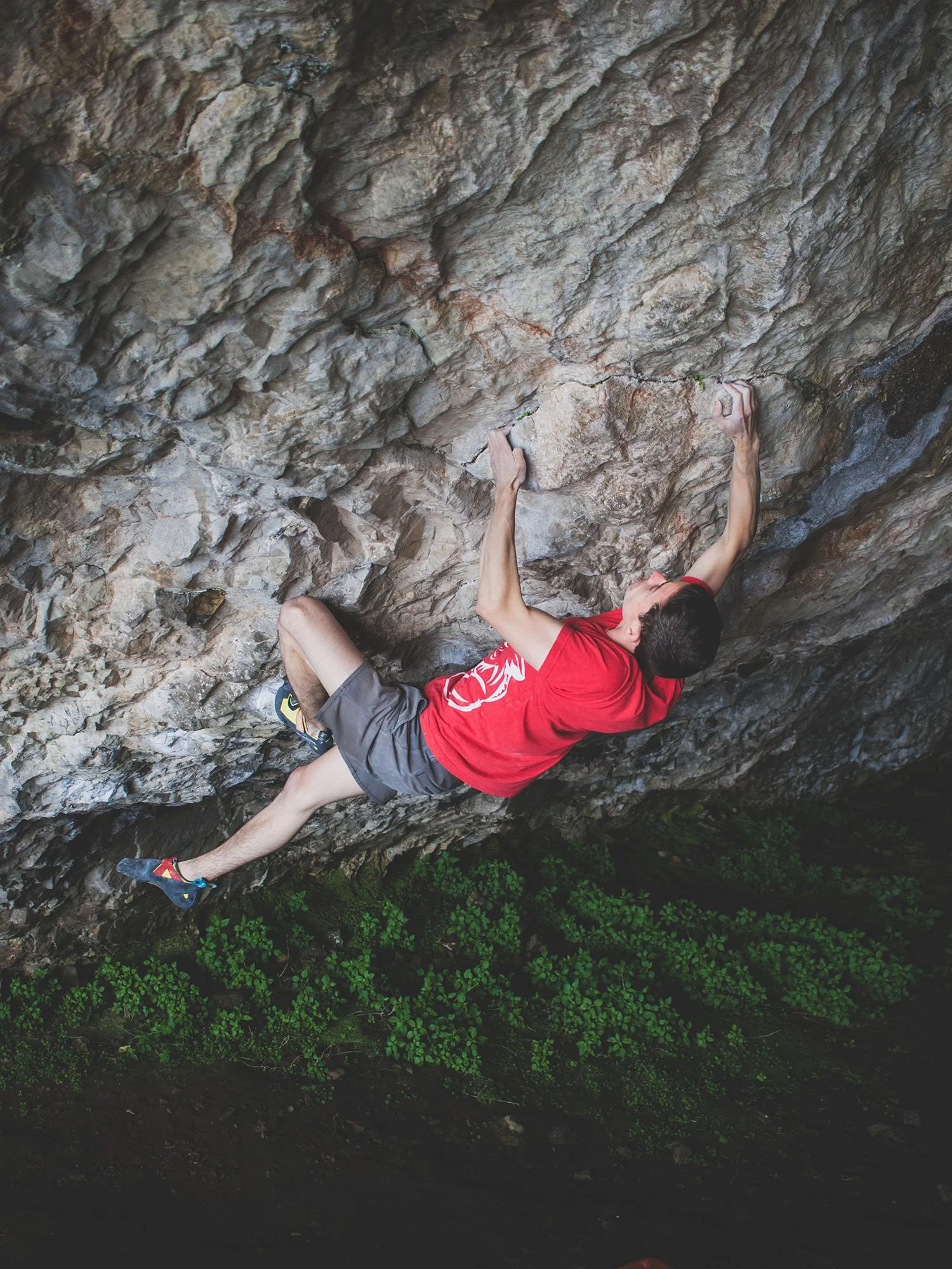
Mid climb internal noise is one of the most distracting and off-putting experiences you can have whilst on the wall. It is often enough to ruin great attempts on a climb, and often ruin your experience altogether. Negative self talk, distracting thoughts and a narrative of doubt are all waiting to steal a potentially successful attempt on a project off you. I can think of several experiences where I essentially talked myself out of completing a scary topout or a hard last move, just because I was thinking about it whilst on the wall. These thoughts can even be seeing yourself on the top of the boulder and thinking ‘this is the go’, long before you’re at the top. The fact is, I was not focussing on the next move, but on something that could happen in future, or had happened in the past. So why do these thoughts matter? And how do we start to keep them quiet whilst we focus on the job in hand?
Why it Matters
In a nutshell, this noise in our mind means we are losing focus on the task at hand. It’s analogous to sending a work email whilst thinking about what we’re having for dinner. The work email ends up drafted atrociously, quite likely with a food themed word thrown in, and our shopping list is only half done. In our climbing scenario, we start thinking about 3 moves ahead, or the topout while we’re at the crux, and we’re completely out of focus. We’re not able to fully optimize each move, and climb the boulder in a way that gives us the best chance to succeed. It may seem like our body is just going through the motions, so what does the brain matter? But we also know that when we do something with focus and full attention, we do a far better job of it, so why don’t we try to facilitate this on the wall? Well mostly because we often don’t realise it’s happening, and secondly because we don’t fully realise how it’s affecting us. So next time you find yourself wandering mentally whilst on the wall, ask yourself if you could have put that focus into something on the wall which would have made a difference. A bit more focus on placing a foot, or being a bit quicker making a few moves to have had more energy. This is especially relevant on hard crux moves where focusing on a certain part of the move is of vital importance to progress. If you can do it in isolation, you need to be able to carry that thought and focus through to the link, or the whole thing falls apart. Building this mental focus is crucial. So how do we do it?
Practice
I like to focus on a one-move-at-a-time mindset for hard boulders, giving myself a cue for each move, and focussing on that, each time I complete the move. It may be to find a sweet spot on a hand or foothold, or a reminder to engage a particular muscle, or eye up the hold with laser precision. Whatever it is, having this cue allows me to remain fully present on each move of the climb, and flow between them. If doing this for a whole boulder is too much, start with 2 to 3 move boulders, and find nuances and subtleties of each move you can begin to focus on. Starting to build this move-at-a-time mindset will help keep your brain focussed on where it needs to be, the next move! Breathing cues are a more advanced way to start to maintain that focus on longer boulders where it’s possible to slip out of your zone a little. There are many ways you can explore this practice and add layers to it, but there’s a lot too much detail for a short blog entry.
What is for sure is that the higher the level of focus and attention we bring to boulders, the more success we will have.
So switch on, and switch it up!
Eliot