
The Role of Intuition in Outdoor Climbing
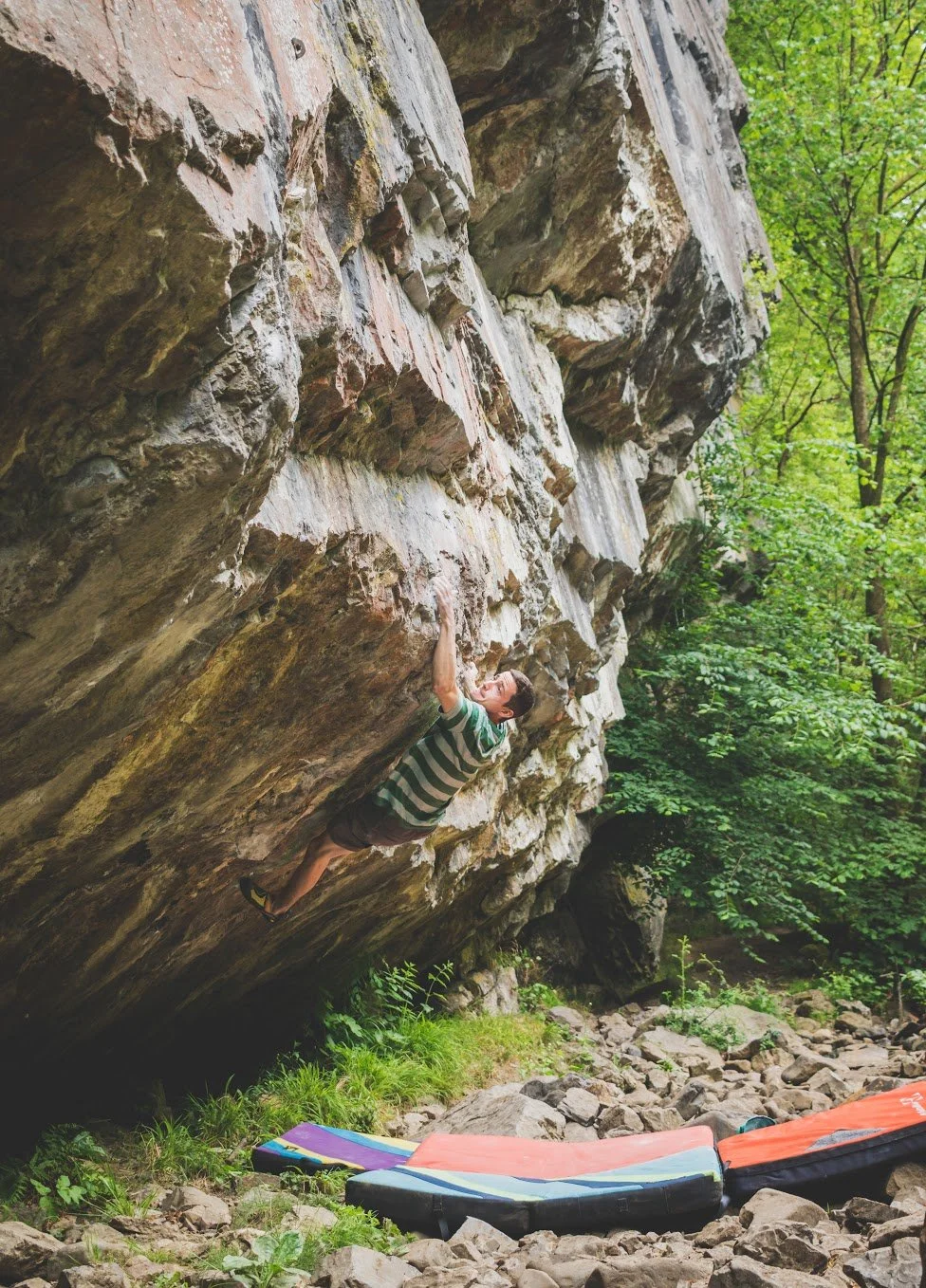
Intuition in climbing is a bit like a 6th sense. Sometimes, stuff just works, and you have no idea how or why you thought about doing it. I can’t count the number of times I’ve had a little hunch to change beta on a move, and it worked. I thought I had refined and found the optimal way for a move, but in some fleeting moment, my brain told me to try something else. How can that be? And is it a trainable thing? Let's puzzle.
What is intuition in climbing?
For me, recognising patterns and shapes on the wall, is one of the most important aspects to me solving boulder problems quickly. Looking at a boulder and understanding the positions I’ll need to be in, and the ways I’ll need to use footholds or handholds to move between positions, is vitally important to doing them quickly. The difference between my proficiency here when I’m climbing on rock regularly and infrequently is drastic. When I’m on form, it’s like having a photographic memory. You can almost see yourself in a shape on the wall, and replicate it at first pull on. But in those hazy periods of plastic, rock becomes alien again. I struggle to see anything, and have to sample so many more ideas before the right one is found. This for me is intuition. Being able to instantly spot the right foothold, or the right order to complete a sequence of moves in, without needing to trial it.
How do you tune it?
Just yesterday, I watched 3 almost identical beta videos of a 7C boulder before a flash attempt. Once on the wall, I operated totally on intuition and used a higher step that that no one else had, and flashed the boulder. This sequence proceeded not to work for either of my friends, and then when curiosity got me, I attempted the sequence from the videos, only to find that mine was in fact the best for me. How did this happen? I believe that a combination of knowing your style and strengths well enough, paired with visualising quickly from the floor or on the wall what could work, is a winning combination for success in climbing, especially on flash attempts. I have often avoided common beta in favour of doing something that better suits my strengths of hard rockovers and bunched feet. The more I try these moves, the quicker I get at working out whether they’re feasible or not. If they don’t work, I want to know why, so I can select the right tool next time. Making a conscious choice and reflecting on it is the key to this tuning of your own intuition. Looking for ‘the way’ for you, trialling it and then learning why it did or didn’t work!
I also find total onsight practice useful, sometimes to remind me of the importance of route reading, but often just to test my natural decision making and quick thinking. What I find here is whether I did the ‘optimal beta’ or not. If not, I want to know what I missed and why. Was I just careless? Or did I genuinely not see the better option, and if not, what am I missing in my game? Maybe it’s a particular movement I don’t like, or a hold type or position I’ll try and avoid. Some people hate crossovers, others bumps or matches. See what you’re missing in your toolkit, and improve in that area!
Most importantly, give yourself some space to be intuitive and climb purely on instinct. But as with everything in climbing; more movement, more focus, more fruit!
Keep cherry picking,
Eliot