
Emotional Control on the Wall: Staying Calm Under Pressure
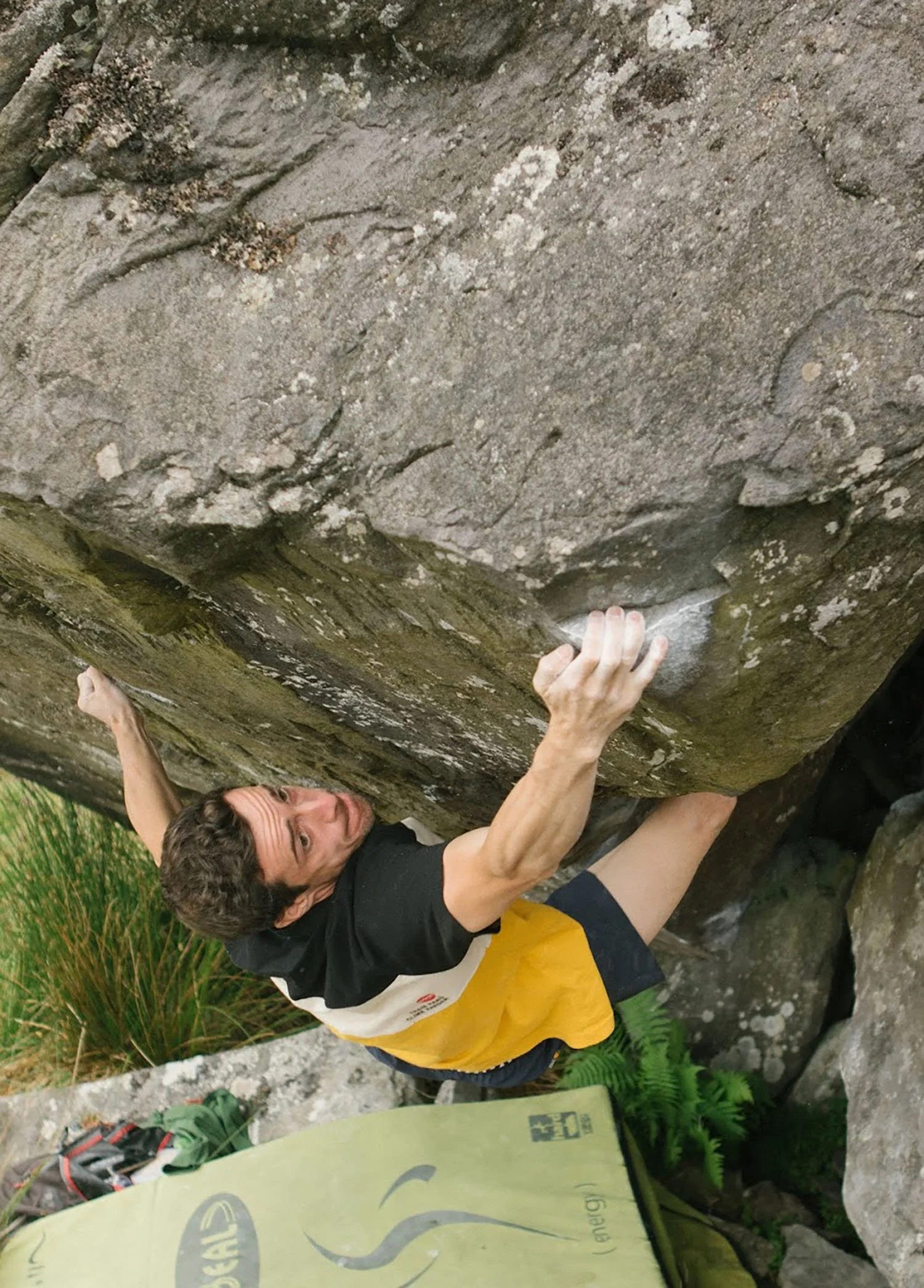
You’ve just stuck the crux of a boulder you’re desperately close to climbing in a session. You know any go can be the go, but you’re aware your skin is failing, and many more goes will take it past the point of no return. You don’t want to lose the rest of your trip to messed up skin. So you stick the crux, and place your foot to do the next move. It slips, but you manage to hold on. You panic, and place it again with more assertion, struggling to get the pinpoint accuracy you need. The 3 seconds this takes feels like 30. You try again, push through the foot and do the next move, but now you’re tense, rigid and eyeing up the next hold and thinking ‘I’m drained’. You half heartedly attempt the next move, but fall. What was the mistake? Was it the foot slip? Or was it the ensuing tension and pressure that caused you to empty the gas tank by not staying calm? Let’s dig in.
Reactivity
So a foot slip is a foot slip. In this situation, it didn’t cost us the send, but it cost a few seconds. Now what you can do in a few seconds is sabotage a performance entirely. It always amazes me how just a few seconds of hesitation, or a mistake at a crucial moment, can cause a fall when success was pretty assured. Our reactions to these situations are important. We’ve all been there, we get through a crux and know it’s possible, only for a tiny mistake to cost us a send because we lost focus, and lost our flow. We react by way of panic, and instantly see our send slipping away. So how can we avoid this reaction? How can we get straight back in the zone when a mistake threatens to throw us off where we shouldn’t be.
Practice
Firstly, we can mentally prepare ourselves for this eventuality, and acknowledge that it is possible. When we accept this, we can start to put things in place should a mistake occur. The key is to honestly analyse what can occur. Is it a foot slip? Can we steak our beta? Is it grabbing a handhold wrong? Can we adjust, or use a tick mark to improve our accuracy. Sometimes, things can happen and we have no way to prevent them, we just have to deal with them. So asking yourself what these things could be, is the first step to being prepared for them.
On the wall, in those situations where a mistake has occurred, start by taking a big deep breath, and focusing purely on that. Our natural response in these situations is to hold our breaths and tense, so counteracting that is my first priority. From here, your body is instantly more relaxed and you’re able to slow down and try to correct the mistake. I’ll then try and slip straight back into my normal rhythm of breathing (more on this in another post). What I’m trying to do is use my breathing to bring me back into my rhythm, and get myself out of my own head. As soon as we allow ourselves to think and react and get flustered, we’re lost. Breathing is the key to stepping back into our auto pilot mode.
A big deep breath before a crux move is another great way to calm you down and avoid that tensing up that drains the tank so quickly. It’s very easy to climb like a pressure cooker without breathing, with each move feeling more difficult and less fluid. Allow yourself to pause, slow your pace down and find positions of balance. Climbing in this way, you don’t rush, and you don’t tense up through a boulder.
Ultimately, with an acceptance that mistakes can happen, and a plan for dealing with them, the more times you are exposed to these situations the better you become at dealing with them. You don’t feel this all consuming pressure of ‘it has to be this go’, you just react instinctively to solve the problem, and get straight back into your zone. That is a satisfying feeling, and one worth working for.
Eliot